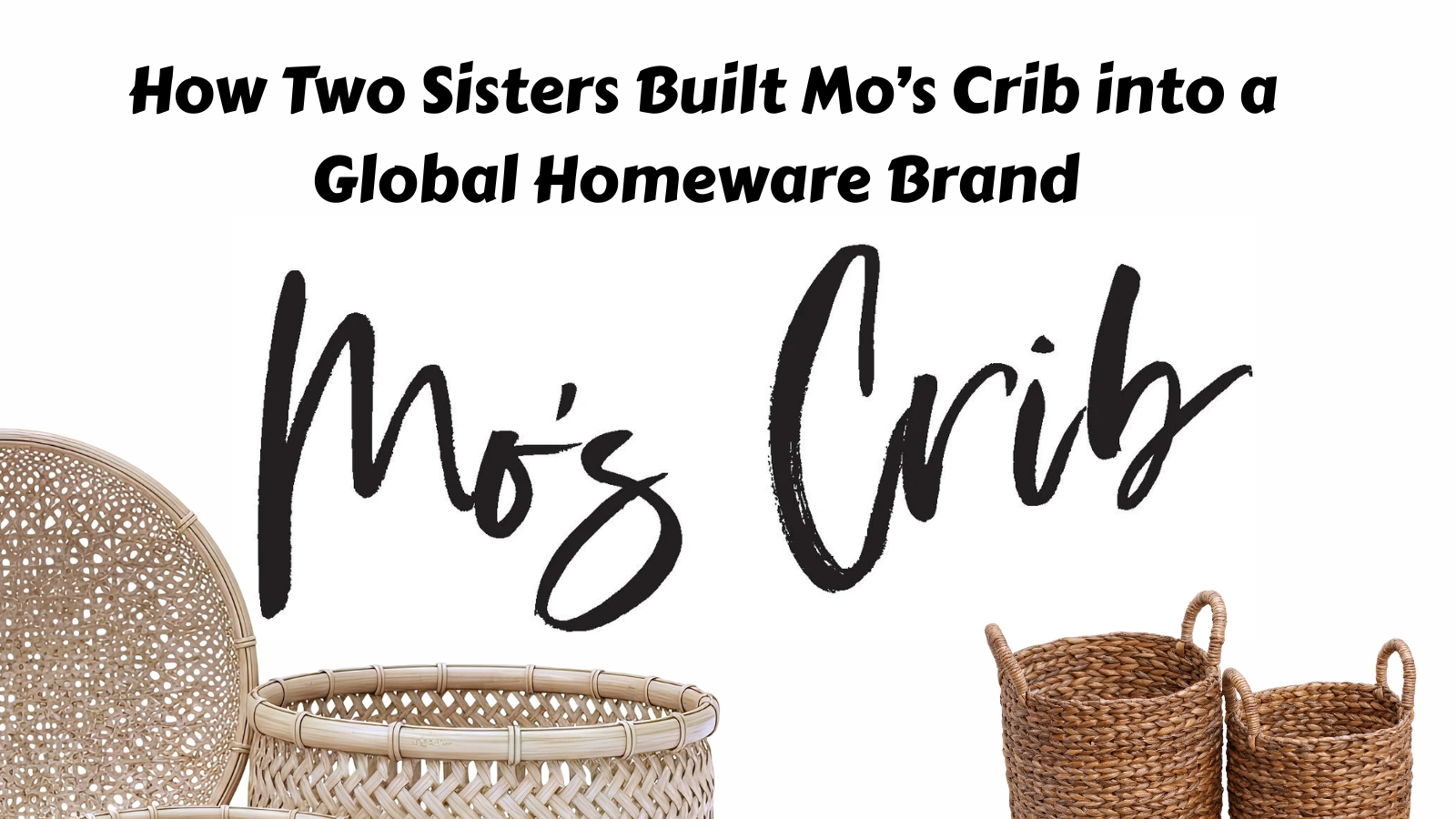
Mo’s Crib is a South African sustainable homeware brand that has done what most businesses only dream of. The brand has cracked the United States retail market and has landed on the shelves of Crate & Barrel and Target. Founded by sisters Morongwe (“Mo”) and Michelle Mokone from Pretoria, the brand’s story started from nearly nothing. The story is rooted in an old, simple township process of weaving old plastic bags into rugs, hats and various items. That love of craft and zero-waste thinking grew into one of South Africa’s most inspiring entrepreneurship stories, one that is building a globally recognised, eco-conscious homeware brand that showcases African craftsmanship.
Mo’s crib now suppliers almost all the retailers in South Africa and globally to a number of countries, including Canada, United Kingdom, Philippines, Costa Rica, Singapore and the United Arab Emirates.
It started with the PVC plastic that no one wanted
Mo grew up doing what many South African households do – crocheting strips of old plastic bags into rugs. Nothing went to waste. That instinct, that you can weave plastic into something beautiful, never left her.
She later spent time in London, where a Japanese roommate taught her how to create origami swans. When her visa expired and she returned to South Africa, she looked for somewhere to sell her paper sculptures. She could not find a single place.

In 2016, her sister Michelle, an agricultural economist, invited her to a local Christmas market in Pretoria. Mo put her origami swans out for sale. They sold out so fast she had to rush home and make more while Michelle held down the stall.
That was only the spark, the real breakthrough came when they started looking for their next product. South Africa has a waste problem most people walk past every day. PVC (polyvinyl chloride) is the third most produced plastic in the world. It is found everywhere: water pipes, construction fittings, plumbing offcuts, etc. When pipes are broken or replaced on construction sites and infrastructure projects, they get discarded and they end up piling up in landfills. And there they sit because PVC is notoriously difficult to recycle through conventional methods. Less than 1% of PVC globally ever gets recycled.
Mo and Michelle looked at those mountains of discarded pipe and remembered a childhood of weaving plastic. What if you cut a pipe into long, thin strips and weave the strips into baskets? The answer, after experimentation, was remarkable. The finished product looks and feels like a traditional hand-woven basket. But it is five times more durable than its grass equivalent. It is washable, bug-resistant, and suitable for both indoor and outdoor use. And every single one is made from material that was heading for a landfill.
The magic at the heart of Mo’s Crib is taking something the world considers worthless, and turning it into something the world’s most discerning retailers want to stock. This was their founding product and their founding idea. But it was only the beginning.
Growing Beyond PVC
As Mo’s Crib found its footing, the sisters expanded their materials and their range. Alongside the reclaimed PVC, they began working with natural African fibres such as banana bark, ilala palm, sisal, and cane and made them into baskets, planters, laundry bins, wall art, furniture, and ornaments.
The natural materials are sourced with the same intentionality as the PVC. Banana bark comes from local farmers. Ilala palm is harvested by women in villages across South Africa and neighbouring countries, who dry and process it before it reaches the workshop. Sisal is 100% biodegradable and is available in abundance across the African continent. MO’s crib now has a full range of over 36 product lines and growing, blending reclaimed industrial waste with Africa’s rich craft tradition.
Their retail footprint today tells the full story of that expansion. Locally Mo’s Crib products can be found in Woolworths, Mr Price Home, @Home and Builders Warehouse. Internationally, retailers such as Crate and Barrel, Target, and CB2 in the USA carry Mo’s Crib products, including stores in Canada, Dubai and Costa Rica.
For three years after that first market, this remained a weekend side hustle. Mo was VP of HR at Nestlé and Michelle was an agricultural economist. By 2019, both had resigned from their corporate jobs to commit fully when unfortunately, Covid hit.
The Real Test of Entrepreneurship
Quitting your job is one thing but quitting your job right as a global pandemic shuts down every market where you sell your products is something else entirely. Michelle has spoken openly about this period of their entrepreneurship journey where there were days they went hungry. At the time, savings were drained. But instead of retreating, they pivoted. They approached retailers directly. They cold-called international buyers, sent weekly follow-up emails to companies like Crate & Barrel and Target and refused to take no for an answer. They broke into retail in March 2020, the same week South Africa announced its first Covid case. Fortunately, their products sold out once restrictions eased. This was a true test of enterprenurship and through vision and sheer tenacity, the Mo’s Crib brand prevailed.
Why This Is a Winning Business
1. The product solves two problems at once. South Africa has an unemployment crisis and a waste problem. Mo’s Crib addresses both simultaneously and turns what others discard into beautiful, functional products, while creating dignified jobs for artisans who might otherwise not have them.
2. They went global without losing the local craft flavour and style. Most small businesses either stay local or get swallowed by the export market and lose their identity. Mo’s Crib exports to a number of countries but their beloved factory sales in various cities in South Africa are still signature. Both markets thrive and local are looking forward to the major factory sales.
3. They treat their people like an asset, not a cost. Mo’s Crib provides artisans with living wages, meals, transport support, wellness Fridays. Their staff retention is reportedly 100%. When people are looked after, quality follows.
4. African craft as a competitive advantage. They did not try to imitate what already existed. They leaned into African craftsmanship and used generally available materials such as ilala palm, banana bark, and handwoven texture. The crafts produced in this manner are authentic and will be difficult to replicate in Chinese factories. Their uniqueness is their magic.
The Recognition
In 2024, Morongwe won the Veuve Clicquot Bold Woman Award — a prestigious global prize now in its 52nd year, recognising women who demonstrate boldness, innovation, and leadership across 27 countries. Nearly 500 women globally have received this honour. Mo joined that list from Pretoria.
Since winning, Mo’s Crib grew from 200 to 300 artisans, with manufacturing now spanning South Africa, Kenya, Ghana, Malawi, and Tanzania. Revenue has grown exponentially. New international retail partnerships have followed. In June 2025, Mo travelled to Reims, France, for the global Bold Woman Award Forum — standing in a historic vineyard with her name on a vine.
Not bad for a business that started with a pile of discarded pipes and a childhood memory of weaving plastic.
Further Reading
For other stories, please refer to this section of our site.