For years, many commentators have predicted the decline of South Africa’s spaza shops. And many even justify the continued dominance of foreign-owned spaza shops. Yet a new generation of entrepreneurs is proving that the future of township retail may be brighter than ever.
Consumers should never have to tolerate dirty stores, expired products, poor customer service or unsafe shopping environments, regardless of where a shop is located. Township residents deserve the same quality shopping experience that consumers expect anywhere else in South Africa. The good news is that a new generation of entrepreneurs is proving that high standards, strong business practices and township ownership can go hand in hand.
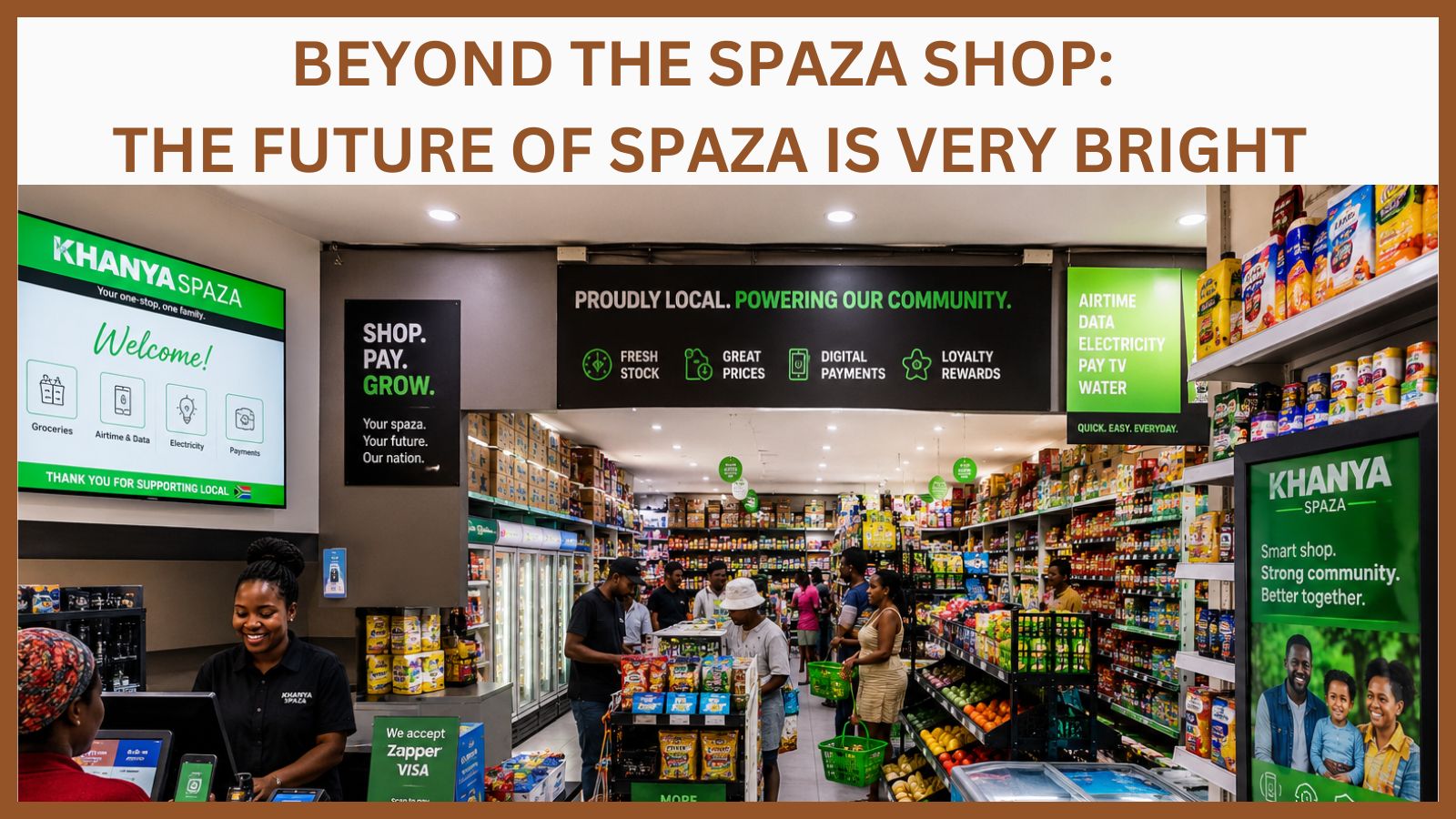
Businesses such as Khona La, Spaza Supply+ and KasiKonnect are helping to build a future in which township retailers are not only locally owned, but are also modern, competitive, well-stocked and customer-focused. Far from being a sector in decline, the future of the spaza shop may be brighter than ever. The real challenge has never been a lack of entrepreneurial talent. The challenge has been access to infrastructure, buying power, distribution networks and visibility.
What is beginning to emerge across South Africa is not simply a collection of successful township businesses. It is the foundation of a township retail ecosystem. An ecosystem where different businesses are solving different problems that have historically limited growth. Three businesses stand out in this regard: Khona La, Spaza Supply+ and KasiKonnect. Individually, they are innovative businesses. Together, they offer a glimpse into what the future of township retail could look like.
The Spaza shop business Is Bigger Than Many People Realise
South Africa’s township economy is one of the most significant economic forces in the country. Millions of consumers purchase groceries, clothing, household goods and services within township communities every day. Yet despite the size of this market, many township retailers continue to operate under difficult conditions. Independent shop owners often lack the buying power enjoyed by major retail chains. They may travel long distances to purchase stock, pay higher prices for products and struggle to compete with businesses that benefit from economies of scale.
This has created a misconception that township businesses are inherently less competitive. The reality is different. Many township businesses are competing without the systems and support structures available to larger retailers. When those support structures are introduced, the results can be remarkable. This is where businesses like Khona La, Spaza Supply+ and KasiKonnect become important.

Khona La: Turning spaza shops into a Network
One of the biggest challenges facing township retailers is fragmentation.
Thousands of businesses operate independently, each negotiating with suppliers on their own, managing stock independently and building customer relationships without the benefit of larger networks. Khona La has recognised this challenge and developed a model designed to address it.
Rather than replacing independent retailers, the business seeks to strengthen them by creating a network that provides access to branding, procurement support and operational systems. The concept is simple but powerful. A single township retailer may struggle to negotiate favourable prices from suppliers. A network of retailers operating under a common structure can achieve significantly greater leverage. This approach allows independent businesses to maintain their local identity while benefiting from the advantages typically associated with larger retail organisations.
In many ways, Khona La is not simply building stores. It is building scale. That distinction matters because scale has often been the missing ingredient in township retail success stories.
Spaza Supply+: Strengthening the Spaza Supply Chain
If Khona La focuses on retail networks, Spaza Supply+ addresses another critical challenge: supply chains. Retail success is not determined solely by what customers see on store shelves. It is also determined by what happens behind the scenes.
Store owners frequently spend valuable time sourcing products from wholesalers, arranging transportation and managing inventory under difficult circumstances. Spaza Supply+ is helping to simplify that process. By improving access to products and streamlining procurement, the business enables retailers to focus more of their attention on serving customers and growing their businesses. This may not always attract headlines, but supply chains are often where competitive advantages are created.
The most successful retailers in the world have mastered procurement and distribution. Township retailers deserve access to the same advantages. That is why businesses like Spaza Supply+ are becoming increasingly important within the township economy.
They are helping to level the playing field.
KasiKonnect: Bringing Spaza shops into the Digital Economy
While physical infrastructure remains important, digital visibility has become equally critical. In today’s economy, businesses that cannot be found online often struggle to reach new customers, partners and opportunities.
This is where KasiKonnect enters the picture. The platform is focused on making township businesses more visible, connected and accessible. For many small businesses, one of the biggest challenges is not necessarily delivering a quality product or service. It is getting discovered. Potential customers may not know they exist. Suppliers may not know how to reach them. Investors and development organisations may overlook them entirely.
KasiKonnect seeks to address this challenge by creating a platform where spaza shops can be discovered and connected. In many respects, it is helping to create a digital layer for the township economy. As more consumers rely on digital platforms to find products and services, this type of infrastructure becomes increasingly valuable.
Visibility creates opportunities. Opportunities create growth. And growth creates jobs.
Why These Businesses Matter Together to support spaza shops
The real story is not about Khona La, Spaza Supply+ or KasiKonnect individually.
The real story is what happens when we view them collectively. Each business is solving a different problem within the township retail value chain. Khona La is helping retailers achieve scale. Spaza Supply+ is helping retailers improve access to stock and supply chains. KasiKonnect is helping businesses improve visibility and connectivity.
Together, they represent something much larger than individual business success. They represent the gradual development of township-owned commercial infrastructure. For decades, many discussions about township entrepreneurship focused on survival.
How do entrepreneurs survive competition? How do they survive economic downturns? How do they survive limited resources? The conversation is now beginning to shift.
The focus is increasingly moving towards growth, scalability and ecosystem development. That is an encouraging sign for the future of South African entrepreneurship.
The Future of Township Retail Is Being Built Today
The next chapter of South African retail may not be written exclusively in corporate boardrooms or shopping malls. It may be written in township communities where entrepreneurs are finding innovative ways to solve long-standing challenges. What makes businesses like Khona La, Spaza Supply+ and KasiKonnect significant is that they are addressing structural barriers rather than temporary symptoms.
They are building networks. They are improving access. They are creating visibility. The township economy has never lacked entrepreneurs. What it has lacked is infrastructure, but that is beginning to change.
Further Reading
For other stories, please refer to this section of our site.